This MSP uses ConnectWise on the PSA, PTO lives in BambooHR, and the monthly visit schedule lives in a spreadsheet. They already owned ConnectWise’s dispatch scheduler. But configuring it was “complex and time-intense,” so the sheet stayed around for decades.
This company sends technicians to over 100 on-site client visits per month. One person, who has spent twenty years on the desk, built the entire schedule by hand in Excel, then emailed every client and technician herself to confirm the meetings. The COO estimated this load was 20% of her week.
Before Third South came in, the operator hand-built the sheet every month. She spent hours collecting who needed a visit, who preferred what, and whose vacation was about to land. Although her team built a template to make the job easier, it was still hours of her time to coordinate hundreds of clients, 8 technicians, while respecting a 30-minute drive time radius and each client’s visitation preferences. Most of this information resided in her head and in the sheet’s history.
Then the confirmation dance. One email at a time, the operator would have to coordinate with the clients, who needed to check their schedule, confirm, and then coordinate with the MSP’s technicians. Inevitably, there would be scheduling conflicts, moving around dates, holidays, and more to complicate the sheet. One mistake frustrated clients, confused technicians, and cost hours to correct. If all went well, it cost 35 hours a month. On-site visits were supposed to be an upsell. Instead they were a tax.
We refused to start with a model and let the AI handle it. This was about constraint solving. Radius, cadence, time-of-visit preferences, and PTO were all definable rules that we could work around.
So we first built a deterministic engine and left the LLM out entirely. We wanted to build trust fast with the operator. The key was showing her that she was still in control. If she wanted to move something she could. If she couldn’t understand why a decision was made, it took a push of the button to figure out why. The tool proposes, and the human decides.
Once trust was established with a core system, we layered on LLMs. This would make suggestions when it came to conflicts. Because it holds every technician’s schedule, its suggestions fit the day the technicians actually have. For example, if one client who preferred afternoon visits were not able to get time on the calendar, instead of dropping them or suggesting a Saturday visit, the LLM would move them to a morning slot, with the other requisite changes that must happen.
We shipped a browser tool over their own roster of who must be visited, and when. A dashboard, month/week calendar with dragging capabilities to reschedule, per-tech schedules with PTO, and a service area map to visualize where each technician is going was included. Every hand-move attaches a “Manual Move- confirm?” review flag that shows the consequences of moving around. Nothing was silently reassigned, so the operator could fully audit and make changes as she wished. The whole app compiles into one encrypted, self-contained file, so client names are not reachable on a static host.
Third South built this after a 30-minute scoping session. We started with an MVP, built from the original Excel sheet. From there, we got validation from the demo, and direction on what was needed most. She pointed out gaps that we could not anticipate: such as their own team’s policies around which clients preferred which technicians, or how to visualize where everybody was on a single day. Then we moved to ways we could make the interface more efficient, and advice on how we could design it for other team members to take over from her.
Now, instead of spending 35 hours a month getting everybody settled, this operator spends less than 3. Annually, this MSP is saving over 400 hours while reducing frustration from their techs and clients. Their project fee paid for itself many times over.
Now that this operator is no longer buried in a spreadsheet, she can focus on more important tasks, such as working with the clients on their customer support desk and updating technicians on new client developments.
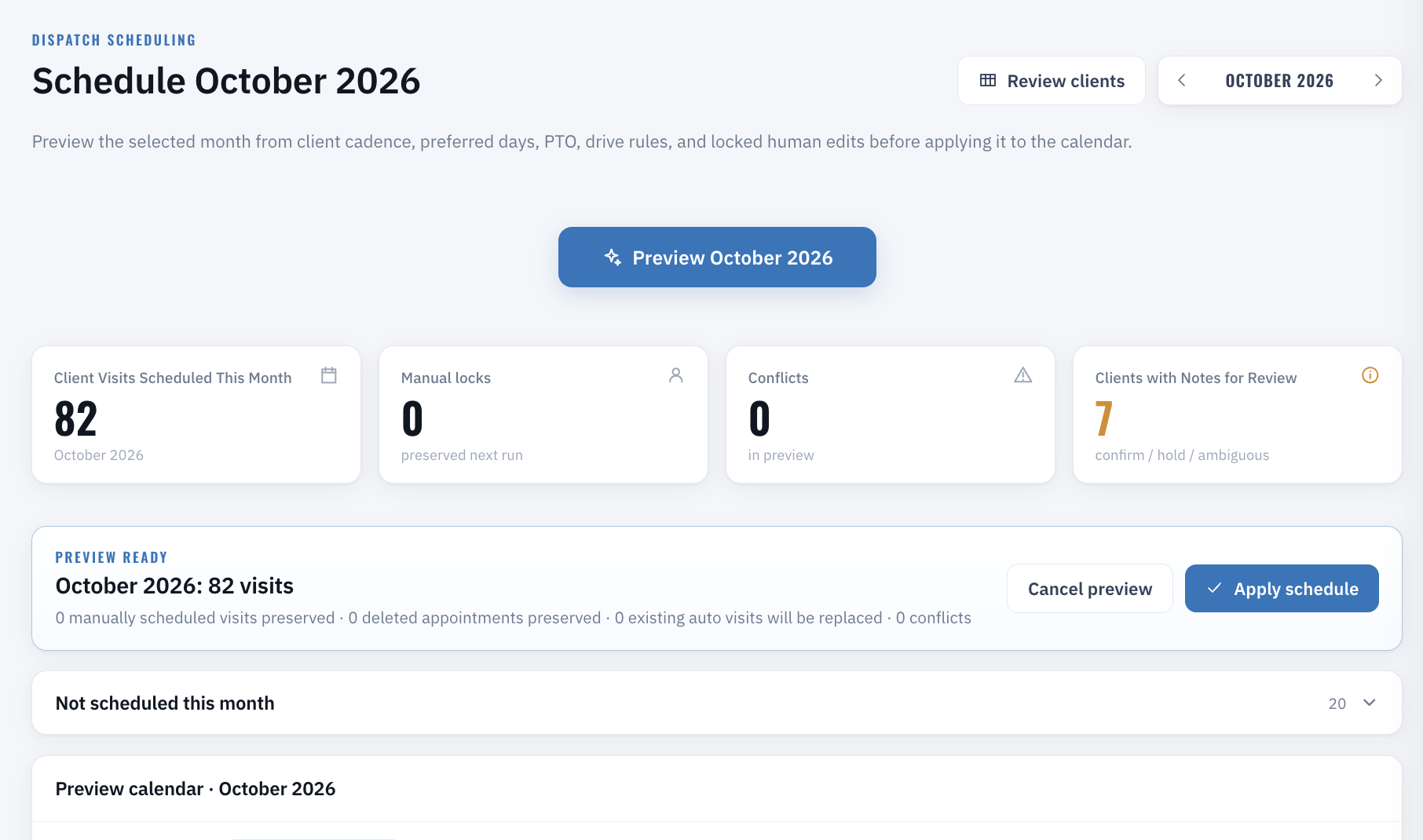
We shipped a browser tool over their own roster of who must be visited, and when. A dashboard, month/week calendar with dragging capabilities to reschedule, per-tech schedules with PTO, and a service area map to visualize where each technician is going was included. Every hand-move attaches a “Manual Move- confirm?” review flag that shows the consequences of moving around. Nothing was silently reassigned, so the operator could fully audit and make changes as she wished. The whole app compiles into one encrypted, self-contained file, so client names are not reachable on a static host.
Third South built this after a 30-minute scoping session. We started with an MVP, built from the original Excel sheet. From there, we got validation from the demo, and direction on what was needed most. She pointed out gaps that we could not anticipate: such as their own team’s policies around which clients preferred which technicians, or how to visualize where everybody was on a single day. Then we moved to ways we could make the interface more efficient, and advice on how we could design it for other team members to take over from her.
Now, instead of spending 35 hours a month getting everybody settled, this operator spends less than 3. Annually, this MSP is saving over 400 hours while reducing frustration from their techs and clients. Their project fee paid for itself many times over.
Now that this operator is no longer buried in a spreadsheet, she can focus on more important tasks, such as working with the clients on their customer support desk and updating technicians on new client developments.